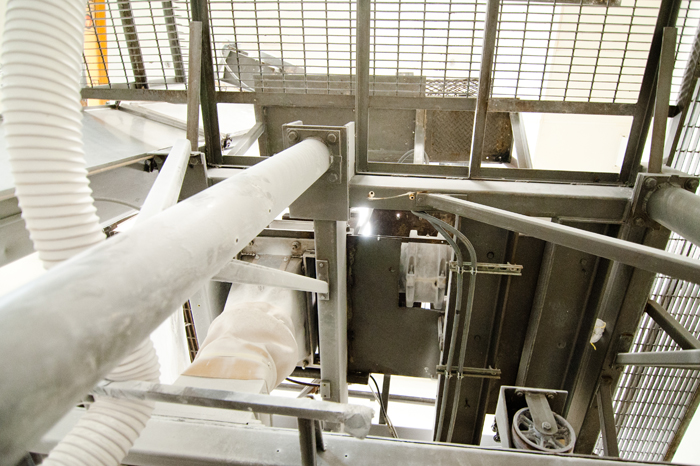
A hammer mill is used for fine grinding of dry or wet materials ranging from 180 microns (80 U.S. mesh) to 45 microns (200 U.S. mesh).
Our Pulva hammer mill operates with a set of hammers on a rotor assembly that rotates at very high speeds. A screen is placed under the hammers to help control the
particle size distribution.
What the Pulva Hammer Mill Does Well
The Pulva hammer mill handles fine grinding that a screen mill cannot reach, with targets from about 80 to 200 U.S. mesh. It suits harder, crystalline minerals and industrial chemicals, and it holds up well on higher-volume runs. Typical toll jobs include:
- Grinding minerals and inorganic salts to a consistent fine powder
- Reducing crystalline chemicals before blending so ingredients stay evenly mixed
- Producing fine grades for repackaging into customer-specified containers
Controlling Particle Size on a Hammer Mill
Three variables set the outcome: the screen opening under the rotor, the rotor speed, and the feed rate. A smaller screen and higher speed produce a finer product. A steady feed rate keeps the grind consistent from the start of a run to the end. Because hammer milling generates some heat, we review heat sensitivity before production begins.
Hammer Mill or Another Method?
If your material only needs delumping or moderate sizing, a Fitzmill is gentler and makes fewer fines. If you need powder finer than 200 mesh with a tight top size, an air classifier mill is the better tool. Not sure which fits? Contact Toll Compaction and we will recommend the right Pulva hammer mill setup or alternative for your material.
Related reading: Size Reduction Methods Compared: Fitzmill, Hammer Mill, and Air Classifier and
Precision and Efficiency: The Role of Size Reduction in Toll Manufacturing