Size Reduction Methods Compared: Fitzmill, Hammer Mill, and Air Classifier
You need to reduce the particle size of your industrial powder, but you have three different milling methods available and limited guidance on which one is right for your material. Choose the wrong method and you end up with the wrong particle size distribution, excessive heat buildup that degrades your product, inadequate throughput, or a tighter PSD than your process actually needs. So which method is right for your material, and what are the real differences between a Fitzmill, a hammer mill, and an air classifier mill?
Toll Blending for Industrial Chemicals: What It Is and When to Use It
Blending is one of the most common operations in industrial chemical manufacturing, but it is not always the most efficient one to run in-house. If your blending equipment is constantly tied up, your capacity spikes seasonally, or you are trying to bring a new formulation to market without committing to production-scale infrastructure, the question worth asking is: would outsourcing your blending to a toll processor actually save you time and money, and what would that arrangement look like?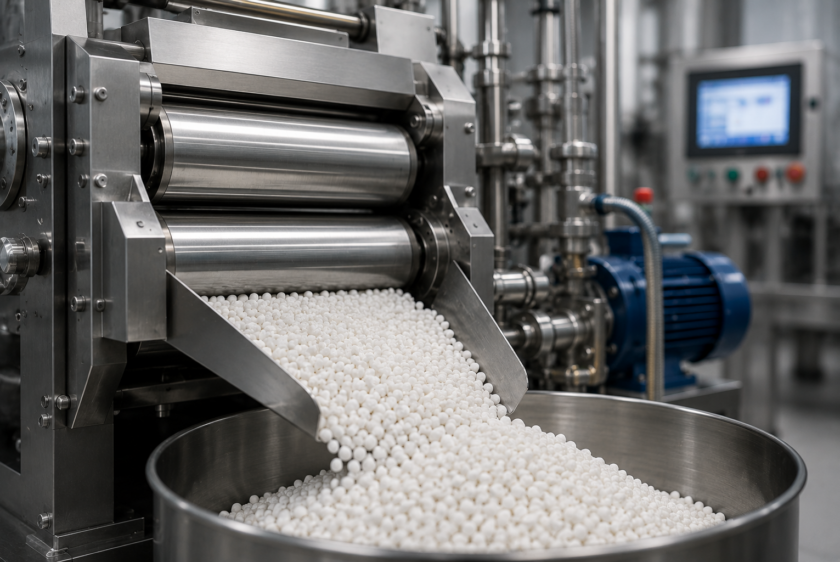
Pelletizing Industrial Powders: When It Makes Sense and How It Works
You are selling a fine powder product and your customers keep asking if you can supply it in pellet form. Or your own production line is losing material to dust, struggling with inconsistent flow, or paying too much per shipment because the bulk density is too low. The question is whether pelletizing is actually the right answer for your material, and whether the benefits justify the added processing step.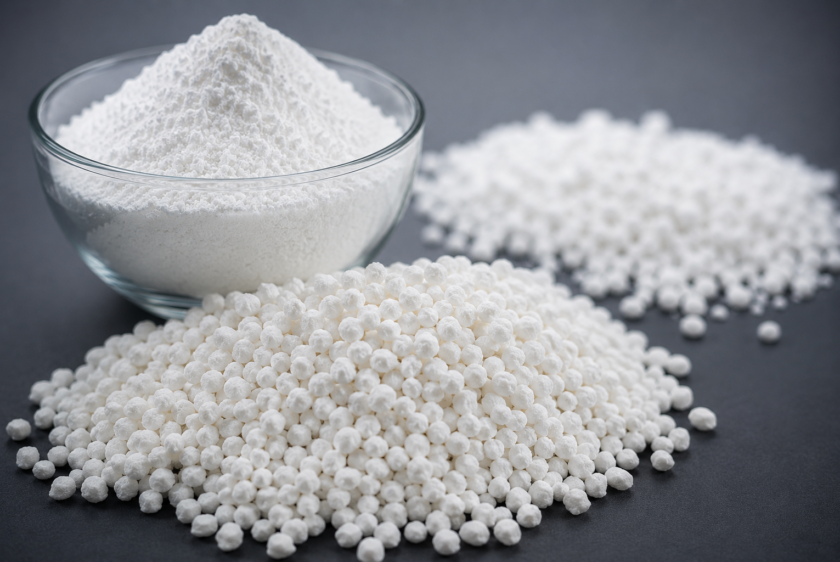
How Roller Compaction Improves Polymer Additive Processing
If you produce or supply polymer additives, you already know the problems: powders that dust excessively, flow poorly through equipment, pack inconsistently into packaging, and disperse unevenly in downstream compounding. These are not edge cases. They affect every production run. The real question is: does roller compaction actually solve them, or is it just adding another step to an already complicated process?
Why Particle Size Distribution Can Make or Break Your Product’s Performance
In the world of powder-based supplements, particle size distribution isn’t just a technical detail—it’s a performance driver. Whether you're formulating capsules, tablets, or drink mixes, the way particles are sized and distributed directly impacts powder flowability, blend uniformity, and ultimately, product performance in supplements. Manufacturers who overlook this critical factor risk inconsistent dosing, poor solubility, and customer dissatisfaction. Understanding how particle size distribution affects your product—and how to control it—can be the difference between a market leader and a formulation flop.
The Hidden Costs of In-House Powder Processing—and How to Avoid Them
Manufacturers often underestimate the true cost of in-house powder processing, assuming that owning equipment and managing production internally will naturally lead to savings. But hidden expenses—from maintenance and staffing to compliance and downtime—can quickly turn an in-house operation into a financial drain. As more companies evaluate toll processing vs in-house production, the data is clear: outsourcing can dramatically reduce manufacturing costs while improving efficiency and product consistency. Understanding where these hidden costs come from is the first step toward making a smarter, more profitable decision.
5 Signs You’re Ready to Outsource Powder Processing
Outsourcing powder processing can be a game-changer for manufacturers looking to scale efficiently, improve product quality, or reduce operational complexity. If your in-house capabilities are stretched thin or you're facing challenges with consistency and throughput, it might be time to consider a partner like Toll Compaction. With decades of experience in dry granulation and particle modification, they help companies across the nutraceutical, food, and chemical sectors streamline production without sacrificing control.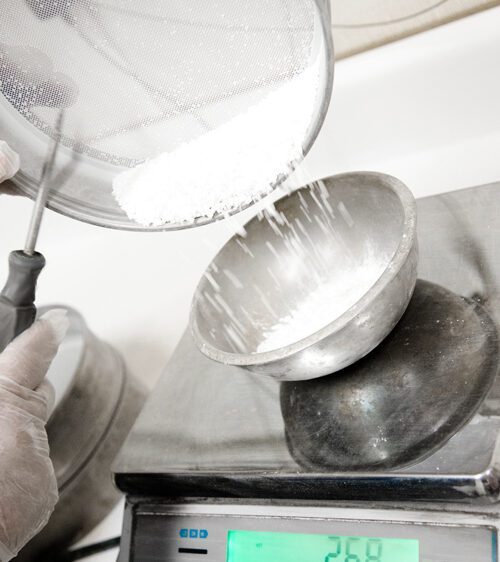
Why Particle Engineering Is the Unsung Hero of Product Performance
In the world of product development, particle engineering rarely gets the spotlight—but it should. Whether you're formulating nutraceuticals, food additives, or specialty chemicals, the size, shape, and distribution of particles can make or break your product’s performance. At Toll Compaction, particle engineering is at the core of their dry granulation and classification services, helping clients achieve optimal flowability, compressibility, and consistency. These seemingly small adjustments can have a massive impact on everything from tablet integrity to shelf stability.